Solar capital allowances by finance route: who claims what
Updated 15 October 2026 · SEO Dons Editorial
Editorial standards: figures are checked against the Capital Allowances Act 2001 and HMRC capital allowances guidance, and updated as rules change. We are independent, so no funder relationship influences these comparisons. General information, not financial or tax advice, confirm your position with your accountant.
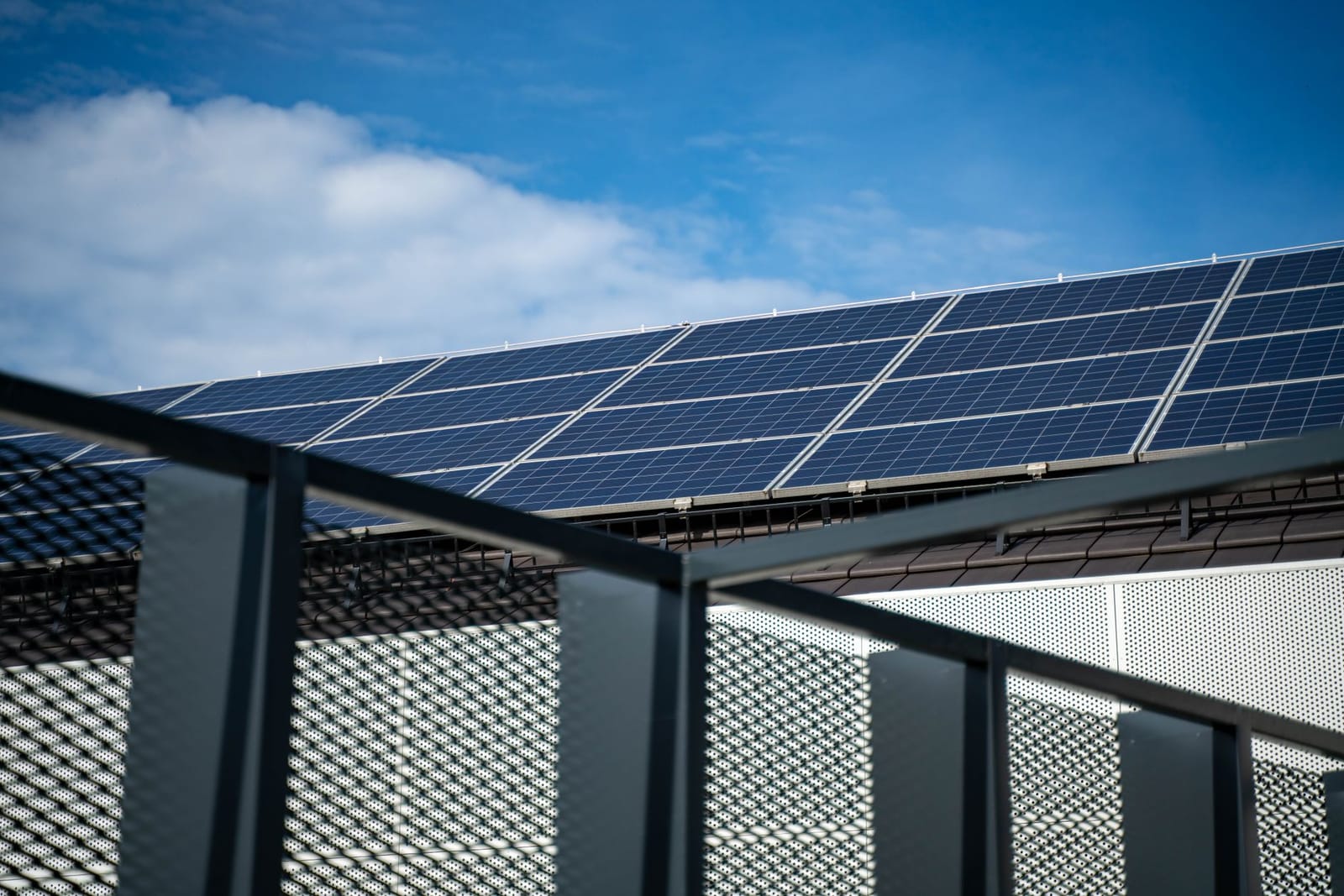
Solar panel capital allowances are the tax relief a UK business gets when it buys a commercial solar system. They turn part of the purchase price into a deduction from taxable profit, so they change what the project really costs. Most of what is written about them online is either aimed at homeowners or gets the commercial rules wrong, so this page sets out how they work in 2026, with worked figures.
It is general information, not tax advice. Your accountant decides how the rules apply to your accounts, and the examples below are illustrations, not a quote. If you want costed finance quotes that show tax relief alongside the monthly payment, request your comparison.
Are solar panels special rate or main rate plant?
Solar panels are special rate expenditure. The legislation names them directly: expenditure on the provision of solar panels is special rate expenditure under section 104A(1)(g) of the Capital Allowances Act 2001, and HMRC's capital allowances manual (CA22335) records that this has applied since April 2012. That single classification explains most of the confusion, because the headline reliefs you read about for businesses, full expensing and the newer 40% first-year allowance, are for main rate assets only.
Special rate does not mean worse in practice. It means the allowances come through different routes, and for most commercial installs the Annual Investment Allowance does the heavy lifting. If you want the pool mechanics, see how the special rate pool and the 6% writing-down rate work.
How the Annual Investment Allowance covers most installs
The Annual Investment Allowance (AIA) gives 100% relief in the year you spend, up to £1m of qualifying expenditure a year. HMRC's guidance confirms it can be claimed on special rate expenditure, and unlike the first-year allowances it has no requirement that the asset is new and unused. It is available to companies and to most unincorporated businesses, and our guide for sole traders and small businesses covers what that means in practice.
Three practical points catch businesses out:
- The £1m is shared. It covers all your qualifying plant and machinery in the accounting period, and is split across companies under common control, so other equipment you buy that year uses up part of it.
- You need taxable profit to use it quickly. If profits are too small, the claim creates or increases a loss, and how that loss can be used is a question for your accountant.
- The date matters. The allowance falls in the period the spend is treated as incurred, which is not always the installation date, especially on a finance deal.
Searches for a solar tax credit usually come from US-style results, so we have set out why the UK has no solar tax credit for businesses and what is claimed instead.
What happens above £1m: the 50% first-year allowance
If your qualifying spend in the year is above the AIA limit, companies can claim a 50% first-year allowance on the excess special rate expenditure. Sole traders and partnerships cannot use it. The unrelieved half goes into the special rate pool and is written down at 6% a year on a reducing balance, starting in the following accounting period. There is no 100% route above £1m for solar.
Worked example: a £1.5m rooftop system
A company with no other qualifying spend buys a system for £1.5m, and pays corporation tax at the 25% main rate. These figures are illustrative:
- AIA: £1,000,000 deducted in year one.
- 50% first-year allowance on the remaining £500,000: £250,000 deducted in year one.
- Year-one deduction: £1,250,000, worth £312,500 at 25%.
- Left in the special rate pool: £250,000, written down at 6% from the following period, so £15,000 of deduction in the first pool year, worth £3,750 at 25%.
A £400,000 system in the same position is covered entirely by the AIA, so the full £400,000 is deductible in year one, worth £100,000 at 25% if there are profits to set it against. To see how that changes payback, try the finance calculator or read how payback and ROI are worked out.
Why full expensing does not apply to solar
Full expensing gives companies 100% relief on main rate plant and machinery, and the 40% first-year allowance for main rate assets sits alongside it. Neither covers special rate expenditure, which is why solar is excluded. A page that tells you a company can deduct 100% of solar capex under full expensing is wrong. The accurate version is that the AIA can give a 100% year-one deduction while your total qualifying spend is within £1m.
The Enhanced Capital Allowance scheme that once gave a 100% first-year allowance for products on the Energy Technology List ended in April 2020, so a product being listed there no longer earns anything extra.
Who claims the allowances: purchase, hire purchase, lease and PPA
Capital allowances follow ownership and the way the deal is structured, so the funding route you pick changes who benefits:
- Outright purchase and loan: you own the system, so you claim. See capital purchase and the business solar loan route. Loan interest is dealt with separately.
- Hire purchase: you end up owning the system, but be careful about assuming the whole cost qualifies in year one. The date the spend counts as incurred depends on the contract and when the system is brought into use, so agree the timing with your accountant before signing. See hire purchase.
- Operating lease and PPA: the funder owns the panels and usually takes the allowances. Your payments are normally treated as running costs rather than giving you an allowance. See operating lease and PPA.
This is the real trade-off behind a no upfront cost deal: you give up the allowance in exchange for no capital outlay. Our route comparison puts the routes side by side.
What counts as qualifying expenditure
The solar panels are named in the legislation. A commercial installation also has inverters, mounting, cabling, scaffolding and commissioning, and the classification of each element is something your accountant should confirm rather than assume. Ask your installer to split the invoice into clear lines, so each element can be classified. Roof repairs or a new roof are different spend and may not qualify.
A battery connected to the building's electrical system may be treated as an integral feature, which is also special rate, so confirm the classification with your accountant. For a canopy or carport, the frame may be treated as a structure, which can fall under the Structures and Buildings Allowance at 3% a year instead, a large cash-flow difference. Agree separate contract lines for structure and generation plant before you sign.
VAT, business rates and the rest of the cost picture
Commercial installs are charged 20% VAT, not the domestic 0%. A VAT-registered business can normally reclaim it, and the allowance is then worked on the VAT-exclusive cost. In England, rooftop solar used for your own consumption has a 100% business rates exemption, covered in our business rates and Smart Export Guarantee guide. For the wider picture of tax relief, VAT and rates together, read commercial solar tax relief, and for what an install costs before relief, see commercial solar cost per kWp.
There are no general grants for private-sector commercial solar in England, so the allowances are usually the largest tax lever. Grants and funding lists what exists and what does not.
How to claim and what to keep
Capital allowances are claimed in your company tax return computations, or your self assessment for an unincorporated business. Keep the signed contract, the invoices split by line, the dates payments fell due, and the commissioning paperwork, so your accountant can fix the date the spend was incurred and the date it was brought into use. If you are comparing quotes, ask each funder to show the tax treatment of the deal in writing, so the figures are like for like.
Frequently asked questions
Can you claim capital allowances on solar panels?
Yes, if your business buys the system. Solar panels are special rate plant, so the Annual Investment Allowance (AIA) can give 100% first-year relief on up to £1m of qualifying spend a year. Above that, companies can claim a 50% first-year allowance. If a funder owns the system under a lease or PPA, the funder usually claims instead.
Do solar panels qualify for full expensing?
No. Full expensing is for main rate plant and machinery. Solar panels are special rate expenditure under CAA 2001 s104A(1)(g), so they sit outside it. The AIA is the route that normally gives the same year-one result when your total qualifying spend is within the limit.
What is the AIA limit for solar panels?
The AIA is £1m a year. It is one allowance shared across all your qualifying plant and machinery in the period, and across companies under common control, so a vehicle fleet or other equipment bought in the same year uses up part of it.
Who claims the allowances on a leased or PPA system?
Usually the owner of the system. Under a PPA or operating lease the funder owns the panels and takes the allowances, and your payments are normally treated as running costs. Agree the tax treatment of any lease with your accountant before you sign.
Are enhanced capital allowances still available for solar?
No. The Enhanced Capital Allowance scheme for energy saving plant on the Energy Technology List ended in April 2020. A product being listed there no longer gives any extra allowance. Freeport and Investment Zone allowances are a separate relief for sites in a designated tax zone.
Related guides
Get your commercial solar finance quotes
Replies by email
- 1. We model every route against your electricity spend, no obligation.
- 2. Comparable, costed quotes with upfront, monthly, tax relief and net cashflow.
- 3. You choose the route that fits, and we reply by email.
- Every route compared
- No upfront options
- No obligation
- Reply by email