Commercial Solar Finance Quotes, Every Route Compared
Get costed, comparable quotes for every way to fund commercial solar, PPA, hire purchase, asset finance, lease, green loan or outright, modelled against your own numbers. No upfront-cost options available.
- Every route compared
- No upfront-cost options
- One-day response
- No obligation
COMMERCIAL SOLAR, FUNDED YOUR WAY






How you fund commercial solar matters as much as the price
For most UK businesses the barrier to commercial solar is no longer whether it works, it is how to fund it. The same 150 kWp rooftop system can be bought outright, financed on hire purchase, funded through asset finance or an operating lease, or installed at zero capital cost under a Power Purchase Agreement, and each route produces a completely different cashflow, tax position and lifetime return. Buying outright gives the highest lifetime return because you keep every unit of saving, all export income and all the tax relief. A PPA gives the lowest upfront cost because a third party owns the system and you simply buy the power. Asset finance and hire purchase sit in between, spreading the cost while you still own the asset and claim the capital allowances. The right answer depends on your cash position, your tax profile and how long you will hold the site. This site models every route against your own numbers and returns comparable, costed finance quotes so you can choose on evidence rather than sales pressure.
- Every funding route quoted and compared on the same basis, not just one option pushed
- We model the finance against your actual electricity spend, so you see the real year-one cashflow
- Straight answers on tax: solar is special-rate, AIA covers most installs, we never overclaim full expensing
- No upfront-cost and fully-funded options for businesses that want solar working without tying up capital
Funding routes
Seven ways to fund commercial solar
Each route changes your upfront cost, who owns the system, your tax position and your lifetime return. Pick one to see how it works, or get quotes across all of them.
Which funding route fits your business?
| Buy outright Cash or green loan | Hire purchase Own it at the end | Operating lease Rent, off balance sheet | PPA Zero capex | |
|---|---|---|---|---|
| Upfront cost | Full cost or £0 via loan | Deposit only | £0 to low | £0 |
| You own the system | At the end | |||
| You claim the tax relief | ||||
| Highest lifetime return | Strong | Lower | Lowest | |
| Keeps capital free | Loan only | |||
| Off balance sheet | Often | Usually | ||
| No maintenance responsibility | Varies |
Why the funding structure changes everything
Funding is the real decision, not whether solar works
For most UK businesses the question is no longer whether commercial solar pays, it is how to pay for it. The same 150 kWp rooftop system can be bought outright, financed on hire purchase, funded through asset finance or an operating lease, or installed at zero capital cost under a Power Purchase Agreement, and every route produces a completely different cashflow, tax position and lifetime return. Buying outright keeps every unit of saving, all export income and all the tax relief, so it delivers the highest lifetime return. A PPA hands ownership to a funder and you simply buy the power, so it removes the capital barrier but gives the lowest lifetime return. Hire purchase, asset finance and a green loan sit in between, spreading the cost while you keep ownership and the allowances. The right answer depends on your cash position, your tax profile and how long you will hold the site.
Straight answers on tax, because most sites get this wrong
Solar PV is special-rate plant for capital allowances, so it does not qualify for the headline 100% full expensing, which applies to main-rate assets only. What it does qualify for is the Annual Investment Allowance, which gives 100% first-year tax relief on qualifying spend up to one million pounds and therefore covers the whole cost of most commercial installs. Above that cap a company can use the 50% special-rate first-year allowance, with the balance written down at 6% a year. If you are VAT-registered you reclaim the 20% VAT through your normal return, so it is a cashflow timing item rather than a net cost. And in England, qualifying rooftop solar for self-consumption is 100% exempt from business rates until March 2035, so going solar does not raise your rateable value. These points change the real net cost of every route, which is why our quotes model them in rather than quoting a sticker price. Tax treatment depends on your circumstances, so always confirm your position with your accountant.
Why self-consumption drives the numbers
The single biggest lever on commercial solar economics is how much of the generated electricity you use on site. A unit consumed on site displaces grid import at roughly 26 to 32 pence, while a unit exported earns only the Smart Export Guarantee rate of around 12 to 16 pence, so a self-consumed unit is worth more than double an exported one. Businesses with strong daytime demand, such as warehouses, factories, offices and cold stores, self-consume 50 to 80% of what they generate and see paybacks of roughly four to seven years before tax relief, or nearer three to five after it. That same demand profile is what makes a financed system cash-flow positive from year one, because the annual saving comfortably exceeds the annual finance or PPA payment. Our quote engine takes your electricity spend and consumption pattern and shows that net figure explicitly for each funding route, so you can compare on evidence rather than on a salesperson's promise.
Model it first
See the numbers before you talk to anyone
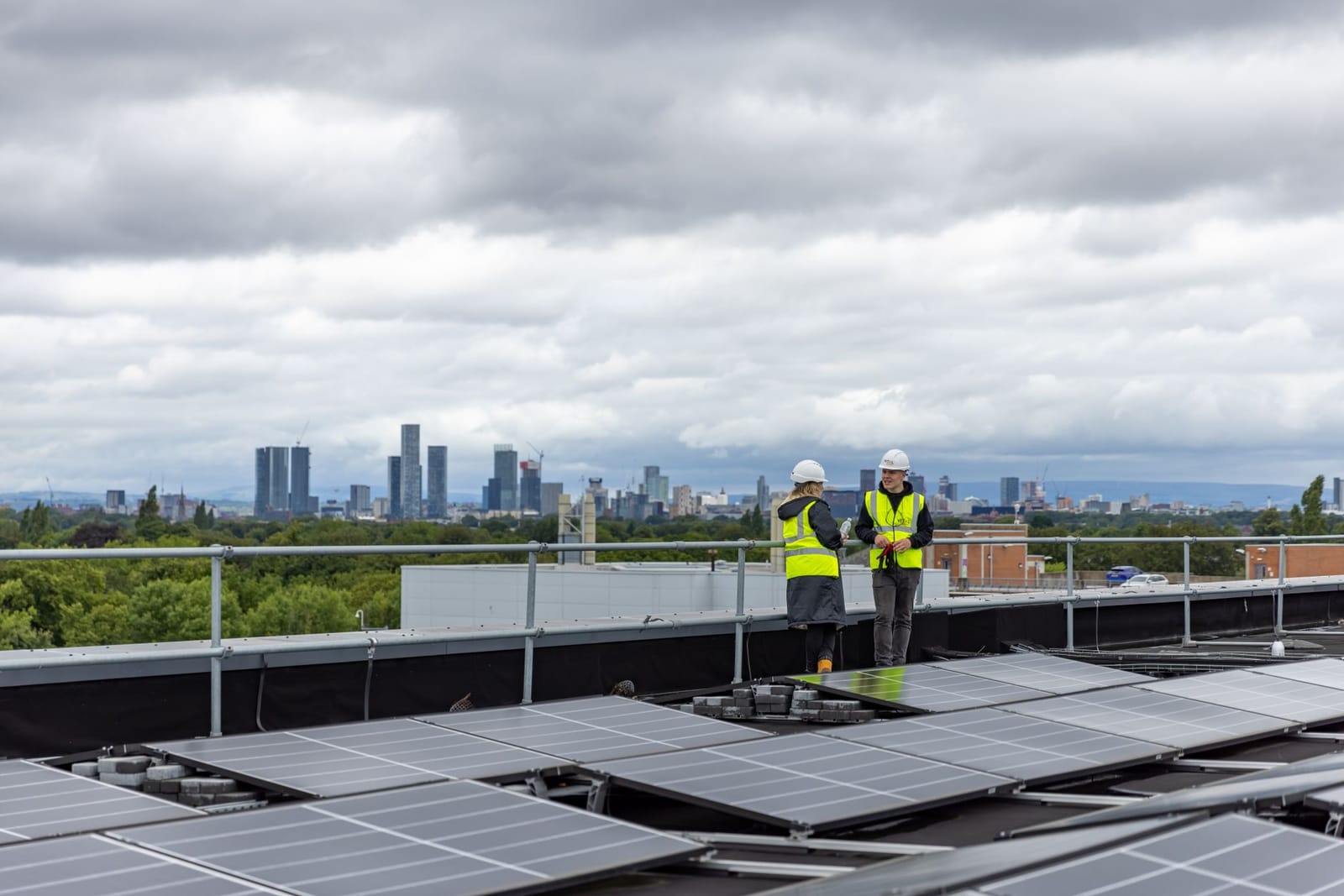
150 kWp warehouse funded on 6-year hire purchase, cash-positive from year one
A mid-size distribution warehouse in the English Midlands with a large daytime electricity load installed a 150 kWp rooftop system funded on 6-year hire purchase, keeping ownership and capturing the year-one tax relief while paying from the energy savings.
From your numbers to comparable quotes
No hard sell. We model the routes, you choose on evidence.
- 01Today
Tell us about your site
One short form: building type, roof or ground, your electricity spend, and how you would prefer to fund it. Two minutes.
- 02Day 1
We model every route
We size the system from your consumption and cost each funding route, factoring in tax relief, export income and cashflow.
- 03Within a working day
You receive comparable quotes
Costed proposals lined up on the same measures: upfront, monthly, ownership, tax position and lifetime return.
- 04When you are ready
Choose and proceed
Pick the route that fits, and we connect you with vetted MCS-certified installers and funders to make it happen.
Commercial solar finance across the UK
Local grid, business-rates and funding context wherever you are. Pick your area for local detail.
London
Greater London. Local grid, grants and finance context for commercial solar.
Birmingham
West Midlands. Local grid, grants and finance context for commercial solar.

Leeds
West Yorkshire. Local grid, grants and finance context for commercial solar.
Sheffield
South Yorkshire. Local grid, grants and finance context for commercial solar.

Manchester
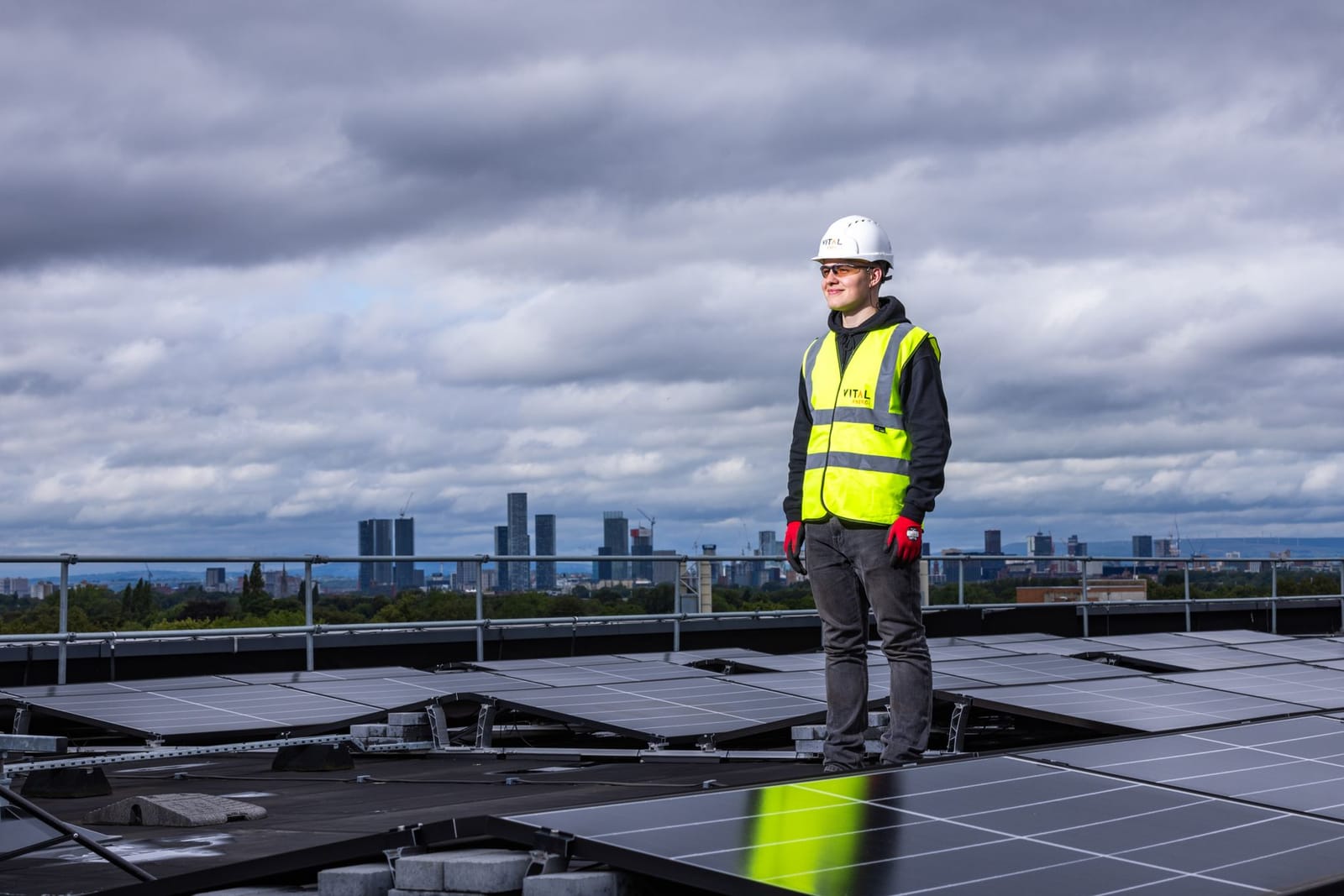
Greater Manchester. Local grid, grants and finance context for commercial solar.
Bradford
West Yorkshire. Local grid, grants and finance context for commercial solar.
Commercial solar finance, answered
The questions finance directors and owner-managers ask most.
Can I get commercial solar with no upfront cost?
Yes. Either a PPA, where a third party owns the system and you buy the cheaper power, or 100% finance, a green loan, hire purchase or lease repaid from your energy savings. Both aim to be cash-flow positive from day one. The trade-off is that you give up some ownership, tax relief or lifetime return in exchange for zero capex.
Is a solar PPA cheaper than buying outright?
Cheaper on day-one cash because there is zero capex, but more expensive over the asset's life. Buying outright gives the highest lifetime return because you keep all the savings, export income and tax relief. A PPA has the lowest lifetime return because the funder's margin comes out of your savings. Asset finance sits in between.
What tax relief can my company claim on commercial solar panels?
For most installs the Annual Investment Allowance gives 100% first-year relief up to £1m, which at 25% corporation tax returns about 25p per £1 spent in the first year. Solar is special-rate, so above the £1m cap a company can use the 50% first-year allowance with the balance written down at 6% a year. Solar does not qualify for 100% full expensing, which is main-rate only. Confirm your position with your accountant.
Does a lease keep solar off my balance sheet?
An operating lease traditionally does, but under IFRS 16 most leases now go on the balance sheet and FRS 102 treatment is tightening. A finance lease and hire purchase are on the balance sheet. Confirm the current treatment with your accountant before relying on off-balance-sheet as a benefit.
Who gets the tax relief and export income under a PPA?
The PPA provider, because they own the asset. You get cheaper power, not the capital allowances or the SEG export payments. If capturing the tax relief matters to you, own the system through cash, a loan or hire purchase.
Can I reclaim the VAT on a commercial solar installation?
If you are VAT-registered, yes. The 20% input VAT is reclaimable through your normal VAT return, provided the system is for business use and you hold a valid VAT invoice. The 0% domestic rate does not apply to commercial buyers, so it is a cash-flow timing item rather than a net cost.
Get costed finance quotes for your commercial solar
Responds within one working day
- 1. We model every route against your electricity spend, no obligation.
- 2. Comparable, costed quotes with upfront, monthly, tax relief and net cashflow.
- 3. You choose the route that fits, and we connect you with vetted installers and funders.
- Every route compared
- No upfront options
- No obligation
- One-day response