How to Fund Commercial Solar: Every Route Explained
Updated 1 July 2026 · SEO Dons Editorial
Editorial standards: figures are cross-checked against gov.uk capital-allowances guidance and Ofgem Smart Export Guarantee rates, and updated as rules change. We are independent, so no funder relationship influences these comparisons. General information, not financial or tax advice, confirm your position with your accountant.
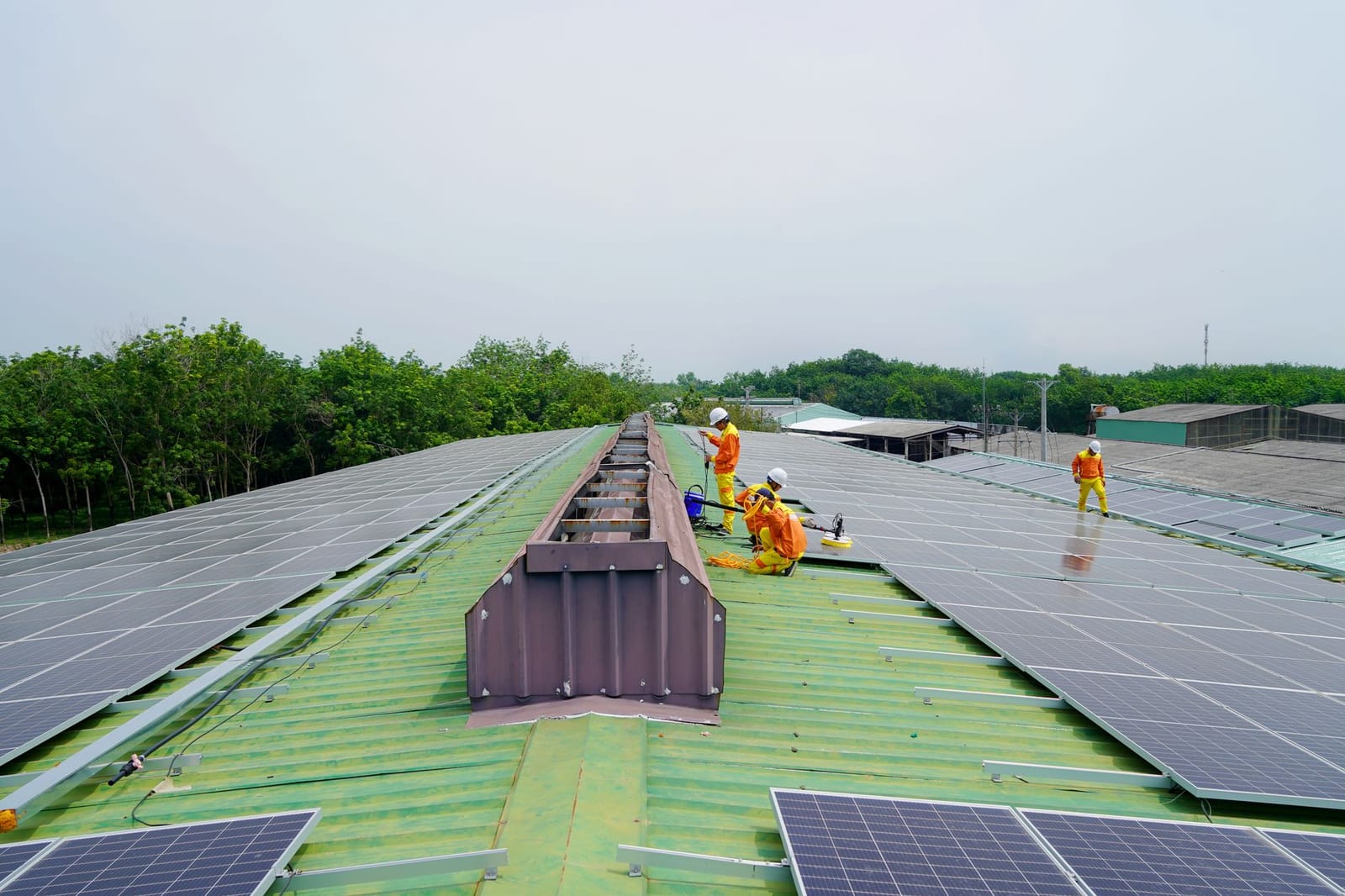
Commercial solar is a substantial capital project, but paying the full cost up front is only one of several options. The right funding route depends on how much cash you want to commit, your tax position, and whether ownership matters to you. This guide walks through all seven routes and how to choose between them.
If you would rather skip straight to numbers, you can get costed quotes tailored to your building and budget.
The seven ways to fund commercial solar
There is no single best route. Each one shifts the balance between up-front cost, ownership, monthly commitment and tax treatment. The main options are:
- Capital purchase (buy outright)
- Hire purchase
- Asset finance
- Operating lease
- Business solar loan or green loan
- No-upfront-cost package
- Power purchase agreement (PPA)
Capital purchase
You pay for the system in full and own it from day one. This gives the strongest long-term return because every unit of generation is yours, and you keep any Smart Export Guarantee (SEG) income from power you export. The trade-off is the largest initial outlay. Read more on buying outright, or check the payback and ROI for a typical system.
Hire purchase
You spread the cost over a fixed term, typically several years, and own the system outright at the end. Payments are usually fixed, which helps with budgeting, and because you become the owner the capital allowances generally sit with you. See hire purchase for how the term and deposit affect monthly cost.
Asset finance
Asset finance is a broad family of agreements secured against the equipment itself. It keeps your existing lending lines free and matches repayments to the useful life of the panels. Terms are commonly 4 to 7 years. More detail is on the asset finance page.
Operating lease
With an operating lease you rent the system for a set period. The funder retains ownership, so it stays off your balance sheet in many cases, and payments are treated as an operating cost. You do not own the panels at the end unless a purchase option is agreed. See operating lease.
Business solar loan or green loan
A green loan is standard borrowing earmarked for an efficiency project. You own the system, take the capital allowances, and simply repay the loan. Pricing is normally set off the Bank of England base rate plus a lender margin, so the rate moves with the wider market. More on the business solar loan page.
No-upfront-cost package
Several routes can be structured so nothing is paid on day one, with the monthly cost designed to sit at or below your expected energy saving. This suits businesses that want the benefit of solar without touching reserves. See no-upfront-cost.
Power purchase agreement (PPA)
Under a PPA, a third party funds, installs and owns the system on your roof, and you buy the electricity it produces at an agreed rate, usually below your grid tariff. You pay nothing up front and carry no maintenance responsibility, but you do not own the asset and cannot claim the capital allowances. Read more on the power purchase agreement page.
Route comparison at a glance
| Route | Up-front cost | Who owns it | You claim capital allowances | Best when |
|---|---|---|---|---|
| Capital purchase | Full | You | Yes | You have cash and want maximum return |
| Hire purchase | Deposit | You (at end) | Yes | You want ownership with spread cost |
| Asset finance | Low or none | You (usually) | Usually | You want to protect other credit lines |
| Operating lease | None | Funder | No | You prefer an off-balance-sheet cost |
| Green loan | None | You | Yes | You want ownership and simple borrowing |
| No-upfront | None | Varies | Varies | Cash flow is the priority |
| PPA | None | Funder | No | You want zero cost and no ownership |
You can model any of these against your own consumption using the finance calculator, or see them side by side on the finance options compared page.
The tax picture, and why it matters to your choice
Tax treatment often decides which route wins, so it pays to understand the rules before you sign anything.
Capital allowances. Solar PV is classed as special rate plant. That means it does not qualify for 100% full expensing or the newer 40% first-year allowance, both of which are limited to main-rate assets. It does qualify for the Annual Investment Allowance (AIA), which gives 100% first-year relief on up to £1m of qualifying spend a year. For the large majority of commercial installs, the whole cost sits comfortably inside that £1m cap, so you can write off the full amount against profits in year one. Where spend exceeds the cap, companies can claim the 50% special-rate first-year allowance on the excess, with the remaining balance written down at 6% a year.
Ownership is key here. On a capital purchase, hire purchase, green loan or asset finance deal you generally own the asset and can claim these allowances. On an operating lease or a PPA the funder owns the system, so the allowances are not yours to claim.
VAT. Commercial solar is charged at the standard 20% VAT rate. The 0% domestic rate does not apply to business installations. If you are VAT registered, that VAT is normally reclaimable, so the effective cost is the net figure.
Business rates. Rooftop solar installed for a building’s own self-consumption is 100% exempt from business rates in England from April 2022 to March 2035, which removes a cost that used to eat into returns.
Export income. The Smart Export Guarantee replaced the Feed-in Tariff. It pays you for surplus electricity you export to the grid, with systems up to 5 MW eligible. Only the owner of the system receives this income, another reason ownership routes can outperform over time.
This is general information, not tax advice. Confirm your own position with your accountant before you commit, as the benefit depends on your profits, VAT status and company structure.
Grants and public sector funding
Grant support is narrow. Schemes such as Salix and the Public Sector Decarbonisation Scheme are for public sector bodies only and are not open to ordinary businesses. If you are a school, hospital or council, it is worth checking eligibility; if you are a private company, plan on the funding routes above rather than waiting for a grant. See grants and funding for what currently applies.
How to choose
Work through three questions:
- Do you want to own the system? If yes, favour capital purchase, hire purchase, a green loan or asset finance so you keep the allowances and the SEG income. If ownership does not matter, a PPA or operating lease removes the outlay and the maintenance burden.
- What does your cash flow allow? If reserves are tight, a no-upfront or PPA structure lets solar pay for itself from savings. If you have cash and want the best long-term return, buying outright wins.
- What is your tax position? A profitable company that can use the AIA in full gets a strong first-year deduction from an ownership route, which can tip the balance away from a PPA.
The differences in total cost between routes can be significant, so it is worth comparing real figures rather than deciding on instinct. The cost page shows typical system prices, and the calculator lets you test each route against your own bills.
Get costed quotes
We are a comparison and quote service, not a lender or financial adviser. We connect you with vetted MCS-certified installers and funders so you can compare costed finance quotes across every route. To see what your building could achieve and what each funding option would cost, request your quotes and we will do the rest.
Related guides
Get your commercial solar finance quotes
Responds within one working day
- 1. We model every route against your electricity spend, no obligation.
- 2. Comparable, costed quotes with upfront, monthly, tax relief and net cashflow.
- 3. You choose the route that fits, and we connect you with vetted installers and funders.
- Every route compared
- No upfront options
- No obligation
- One-day response