How power purchase agreement (ppa) works for commercial solar
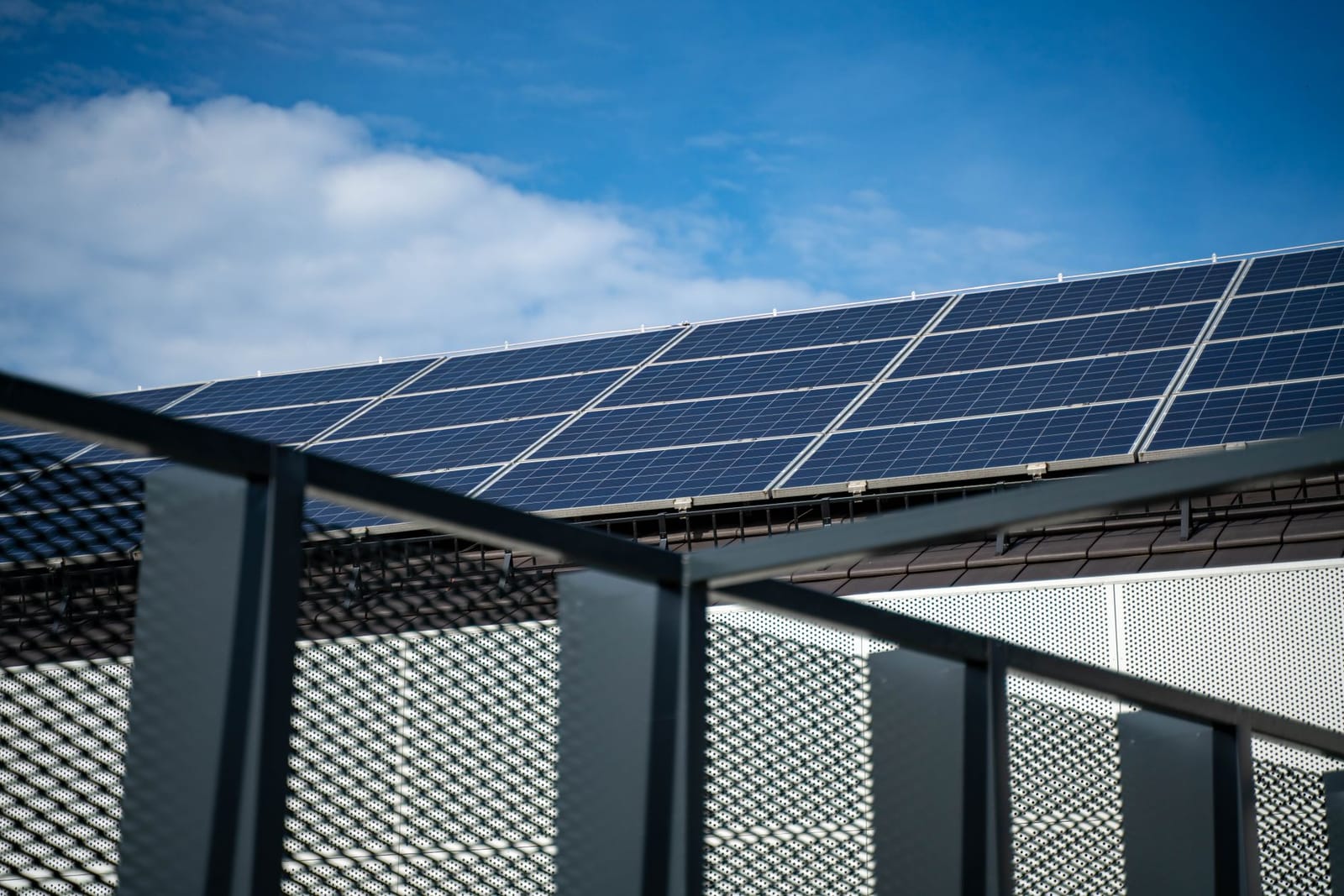
A third-party funder pays for, installs, owns, insures and maintains the system on your roof or land at no capital cost to you. You sign a long-term agreement to buy the electricity it generates at an agreed price per kWh, typically well below your grid import price and usually with a fixed or inflation-linked annual escalator. At the end of the term you can usually extend, buy the system at fair market value, or have it removed. Because the funder owns the asset they, not you, receive the capital allowances and export income.
Where a Power Purchase Agreement fits
A Power Purchase Agreement, or PPA, is the funding route businesses reach for when they want the benefit of on-site solar but none of the capital outlay, ownership burden or maintenance responsibility. Instead of buying an array, you sign a contract to buy the electricity it produces. A third-party funder pays for the system, installs it on your roof or land, owns it, insures it and keeps it running. You simply pay a per-unit rate for the power you use, and that rate is fixed by contract at a level below what the grid charges you today.
In practice a PPA usually delivers a first-year rate somewhere in the region of 9 to 18p per kWh, set against an import price of roughly 26 to 32p. The saving is real and it lands from day one with zero capex. What you give up, in exchange for that convenience, is ownership of the asset and the larger lifetime return that comes with owning it outright. For a like-for-like comparison against buying, see finance options compared.
How it works in practice
The funder designs the system to match your on-site demand, because a PPA earns its money from the power you actually consume, not from what is exported. Once installed, you are billed for metered generation you use, typically monthly, at the agreed unit rate. Terms tend to run long, commonly 10 to 25 years, which gives the funder time to recover the capital and margin.
Almost every PPA carries an annual escalator, a fixed percentage uplift applied to the unit rate each year. This is worth understanding clearly. If grid prices rise faster than your escalator, your discount widens over time. If grid prices stall or fall while your escalator keeps climbing, the gap narrows and in a bad scenario could close. The headline first-year rate is only half the picture; the escalator decides how good the deal looks in year twelve.
Because the funder owns and operates the array, maintenance, monitoring, insurance and inverter replacements sit with them, not you. There is no depreciating asset on your books and no repair bill to budget for.
Who it suits, and who it does not
A PPA suits an organisation with strong, steady daytime electricity demand that wants immediate savings, predictable energy costs and no capital or operational involvement. It works well where preserving cash for the core business matters more than maximising the return on a solar asset, or where internal approval for capital spend is slow or unlikely. Tenants and multi-site operators who cannot or will not commit capex often favour it too.
It suits you less well if you have the cash or appetite to buy, because ownership routes such as capital purchase or a business solar loan keep the tax reliefs, the export income and the full lifetime saving in your own hands. A PPA delivers the lowest lifetime return of the common routes precisely because the funder, not you, captures the asset's value. It is also a poor fit if you expect to move premises, sell the building or need flexibility, since the long lock-in and the buy-out terms can be awkward to unwind.
The tax and accounting angle
The defining feature of a PPA is that you never own the system, so the tax reliefs available to a purchaser do not come to you. The funder claims the capital allowances and keeps any export income under the Smart Export Guarantee, the scheme that replaced the Feed-in Tariff and pays for exported power on installations up to 5 MW. Your PPA payments are simply an operating cost, treated like any other electricity bill in your profit and loss account.
It is worth being clear about the allowances you are handing over, because they explain why owning is richer. Commercial solar PV is special-rate plant. That means it does not qualify for 100% full expensing or the 40% first-year allowance, both of which are main-rate only. An owner can, however, use the Annual Investment Allowance for 100% first-year relief on up to £1m of qualifying spend, which covers most installations outright; above that cap the 50% special-rate first-year allowance applies to companies, with the balance written down at 6% a year. A PPA passes all of this to the funder.
PPAs are usually structured to sit off balance sheet, which is often a key attraction. Whether that holds depends on how the contract is written and how it is assessed under IFRS 16 or FRS 102, so the off-balance-sheet treatment should be confirmed in each case rather than assumed. Note also that VAT on commercial solar is charged at 20% and is reclaimable by VAT-registered businesses; the 0% domestic rate does not apply to commercial systems, though in a PPA the funder handles the equipment VAT and you simply pay VAT on your power bill. This is general information, not tax advice, so please confirm the accounting and tax position for your own circumstances with your accountant.
What to watch for
Scrutinise the escalator first, because it quietly erodes the discount you signed up for. Model the unit rate across the full term against a realistic grid-price forecast, not just year one. Read the exit and buy-out clauses carefully: a good PPA lets you extend, buy the system at fair market value, or have it removed cleanly at the end, but the definition of "fair value" and any early-termination penalties vary widely and can be expensive. Check who carries performance risk if generation underdelivers, and confirm what happens if you sell or vacate the building mid-term. The long lock-in is the trade-off for zero capex, so make sure the terms you are locking into are ones you can live with for a decade or more.
Compare it against the alternatives before you commit
A PPA is one of seven funding routes, and the cheapest headline is rarely the best lifetime value. We are a comparison and quote service, not a lender or financial adviser, and we connect you with vetted, MCS-certified installers and funders so you can weigh a PPA against ownership and lease options on real, costed numbers. Run the figures on the finance calculator, then get a quote and see how a PPA stacks up against buying for your site.
Pros
- Zero capital cost
- No maintenance or performance risk, the funder carries it
- Immediately cheaper power than the grid
- Predictable, budgetable energy cost
Trade-offs
- Lowest lifetime return, you never own the savings
- Long contract lock-in
- Escalators can erode the discount over time
- You forgo the capital allowances and SEG export income
- Buy-out and early-exit terms need careful review
Not sure this is the right route? Compare every funding route side by side, or read the deeper explainer on commercial solar finance options.